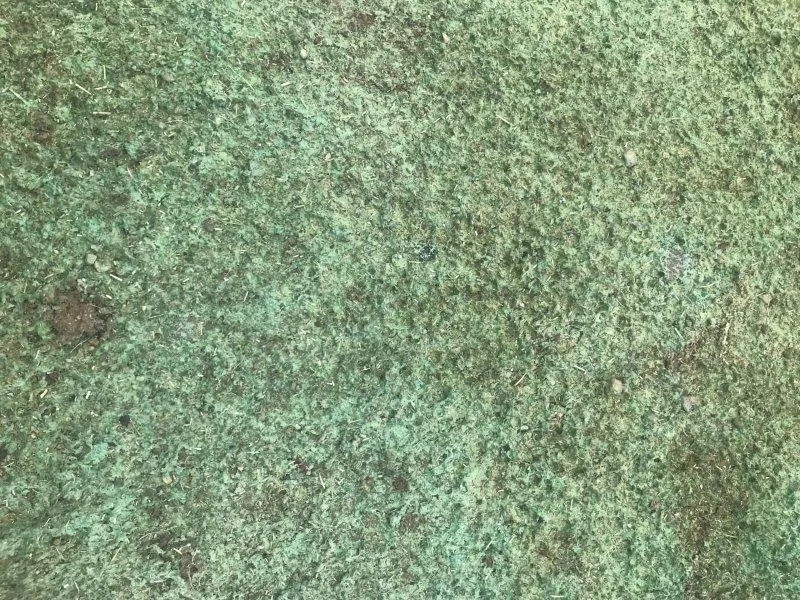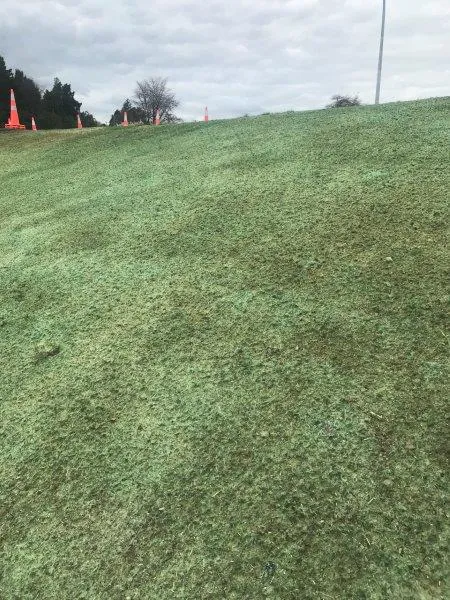

It is a different product from HydroMulch, which uses wood fibre, and it is chosen for different reasons. It is also different from blown straw — same material, different delivery. Where a blower truck can reach the ground, blown straw lays a thicker mat and is usually the better choice. HydroStraw is for the ground a blower cannot reach.
Where straw is the better answer
Straw has a longer functional life than wood fibre mulch — up to around five months, against roughly three — so it holds ground that needs covering for a full season rather than a few weeks.
It also resists traffic better than anything else we apply. Bonded straw forms a mat that absorbs and spreads load, where a wood fibre crust breaks up under vehicle movement. On areas that will be driven over after stabilisation, that difference matters.
It suits swale drains, culvert surrounds, berms, and flatter ground prone to run-off, erosion and slipping — providing stabilisation and establishing vegetation in the same application.
What to know before specifying it
Straw can introduce weed seed depending on source, which is why we use wood fibre where a clean species outcome matters. It needs full surface cover maintained to count as stabilised, with reapplication once cover declines. And like any hydraulically applied mulch it is a sheet-flow product — it does not belong in a channel carrying concentrated flow.
We will tell you which of the two your site should have, and why.