
Dust suppression
Dust is the most common reason clients come to us for polymer. It is a compliance issue, a neighbour issue and a safety issue, and on most sites the default answer — a water cart — is expensive, temporary and gone by lunchtime.
A polymer application binds the surface rather than wetting it, so it holds for weeks or months instead of hours. That reduces water cart movements, machine hours and the cost that goes with them.
We treat unsealed and haul roads, quarry and extraction sites, commercial and industrial yards, stockpiles, and exposed earthworks and subdivisions.
Trafficked and untrafficked surfaces need different chemistry. A haul road carrying loaded trucks needs a product that stays flexible and reknits under wheel load; a stockpile or a finished earthworks area needs one that forms a harder, more weather-resistant skin. Specifying the wrong one is why polymer applications fail.
Surface stabilisation
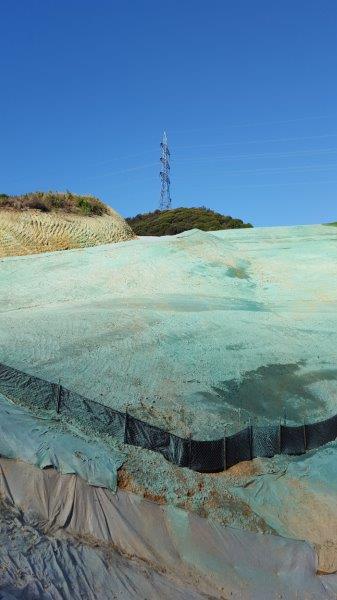
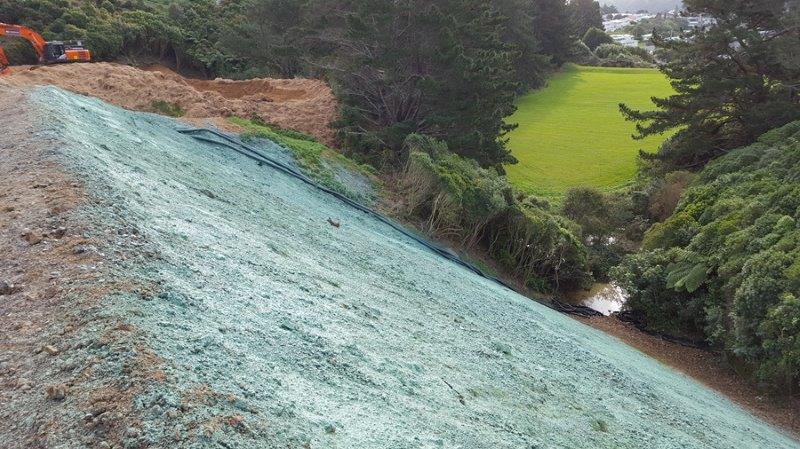
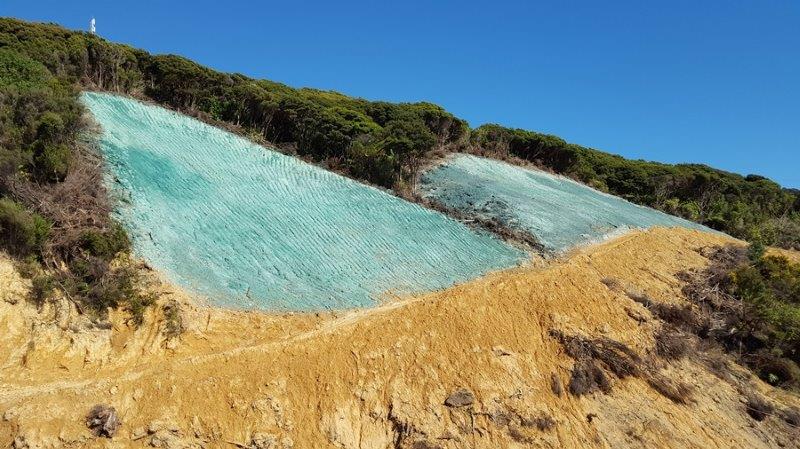
The same products stabilise surfaces where other methods will not work. Where straw mulching is impractical — exposed sites with wind, steep faces, or access a blower cannot reach — a polymer application achieves surface protection that straw cannot be made to hold.
Seed, fertiliser and mulch can be added to the same application, so a face is bound immediately and vegetated as the season allows. Where the site is not ready for seeding, we bind it now and seed later.
How we choose
The binder chemistry in this field moves and we move with it — we keep testing what comes to market and change when something better arrives. Our selection standard is consistent whatever the product: non-hazardous classification under GHS, not classified as a dangerous good for transport, and not classified as toxic to aquatic life. Safety data sheets are available for anything we put on your site.
For sites needing a specific surface stabilisation application, see HydroSkin.